Even the highest-quality sewing pattern does not guarantee a perfect fit if the size is determined incorrectly. That’s why the first and most important step before choosing a ready-made pattern is taking accurate body measurements.
In this article, we will explain which measurements you need to take, how to do it as precisely as possible, and which common mistakes you should avoid.
Why Is It Important to Take Measurements Correctly?
Many women rely only on the clothing size they usually wear in stores. However, size charts vary significantly between different brands. When working with sewing patterns, you should always focus on your own body measurements.
Accurate measurements will help you:
- Correctly determine your size according to the pattern’s size chart;
- Avoid unnecessary pattern adjustments;
- Achieve a better fit of the finished garment;
- Save time and fabric.
What You Will Need for Taking Measurements?
Prepare the following items:
- Measuring tape;
- Mirror;
- Sheet of paper or your phone to record the results;
- Light clothing or underwear (measurements should be taken wearing only underwear or very light, fitted clothing).
For maximum accuracy, it is highly recommended to ask someone to help you take the measurements.
Basic Rules for Taking Measurements
Before you begin, follow these simple guidelines:
- Stand straight but relaxed;
- Do not suck in your stomach;
- Breathe naturally;
- Hold the measuring tape parallel to the floor (perfectly horizontal);
- The tape should fit snugly against the body but not compress or squeeze it.
Main Body Measurements for Women
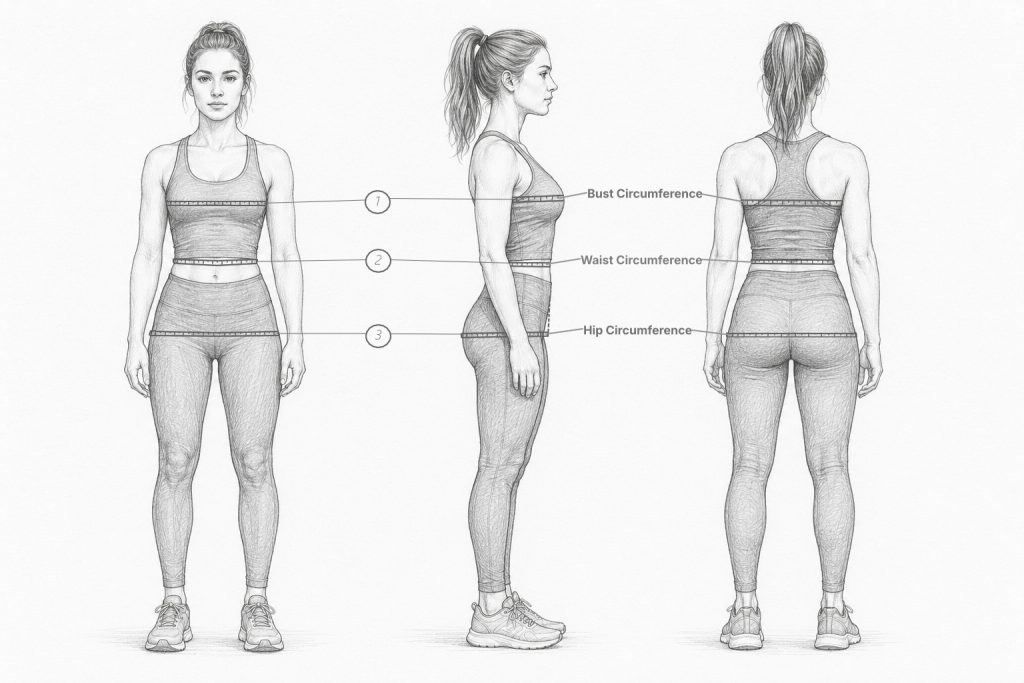
1 - Bust Circumference (BC)
Measured at the fullest part of the bust. The measuring tape runs horizontally around the torso, passing through the shoulder blades and the most prominent points of the breasts.
This is the main measurement for determining the size of upper-body garments: blouses, dresses, jackets, and coats.
2 - Waist Circumference (WC)
Measured at the narrowest part of the torso.
If you have difficulty finding your natural waistline, tie a thin string or ribbon around your waist and let it settle into its natural position.
3 - Hip Circumference (HC)
Measured at the fullest part of the hips and buttocks.
The tape must run strictly horizontally.
This measurement is especially important for skirts, trousers, shorts, and fitted dresses.
Most Common Mistakes :
- Sucking in your stomach – The desire to get a smaller size leads to inaccurate results and, as a consequence, an uncomfortable fit of the finished garment.
- Pulling the tape too tight – The measuring tape should only touch the body lightly — without pressing.
- Measuring over bulky clothing – Thick sweaters or hoodies can add several centimeters to your real measurements.
- Using old measurements – Your body can change over time. If you haven’t updated your measurements for a long time, it’s better to retake them before choosing a new pattern.
How to Determine Your Size Using the Chart?
After taking your measurements, compare them with the size chart provided with the pattern.
Women's standard sizes
To determine your size and choose the correct pattern size, compare your key measurements (bust, waist, and hip circumference) with the size chart below.
| Size | 36 XS | 38 S | 40 M | 42 L | 44 XL | 46 2XL | 48 3XL |
| Bust girth | 84 | 88 | 92 | 96 | 100 | 104 | 110 |
| Range | 82-86 | 86-90 | 90-94 | 94-98 | 98-102 | 102-107 | 107-113 |
| Waist girth | 66 | 70 | 74 | 78 | 82 | 86 | 92 |
| Range | 64-68 | 68-72 | 72-76 | 76-82 | 82-84 | 84-90 | 90-96 |
| Hip girth | 92 | 96 | 100 | 104 | 108 | 112 | 117 |
| Range | 90-94 | 94-98 | 98-102 | 102-106 | 106-110 | 110-115 | 115-120 |
If your measurements fall between two sizes:
- For tops and shoulder garments prioritize the Bust Circumference;
- For skirts, trousers and shorts — prioritize the Hip Circumference;
Advice from a Pattern Designer
Save your current measurements in a separate file or notebook. This will greatly simplify the process of choosing new patterns and help you quickly determine the right size for different models.
Accurately taken body measurements are half the success of creating a beautiful and comfortable garment. Spend a few minutes taking precise measurements, and your future projects will reward you with a flawless fit and a professional finish.